

The organism humans are genetically closer to than plants — and why it changes how we understand nature.
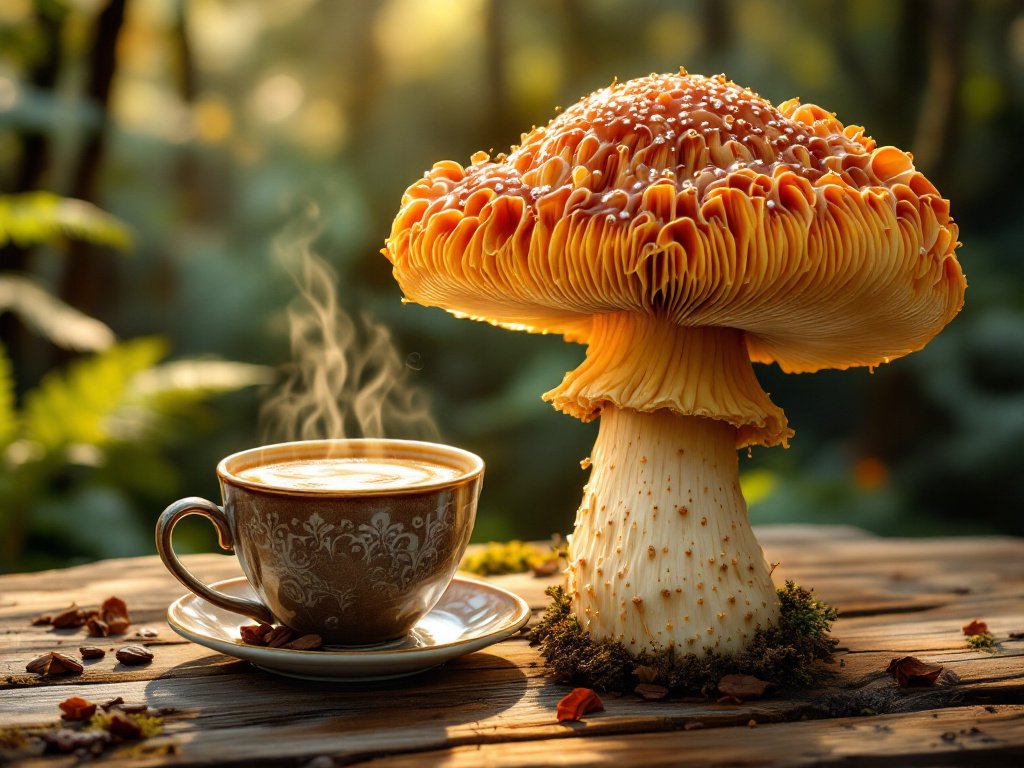
And if you thought I was talking about the chimpanzee or the gorilla — think again.
I was standing in the kitchen earlier today, handling three different types of mushrooms for a dish, and a thought hit me: I know mushrooms are fungi, not vegetables… but why do we treat them like one? If the mushroom is the fruiting body — the “apple” of a much larger organism — then what exactly is the tree behind it?
That question dragged me down a rabbit hole of biology, and the answers were far stranger, and far closer to us, than I expected.
What most people call a “vegetable” on their plate is anything but. Mushrooms don’t behave like plants, don’t breathe like plants, and definitely don’t eat like plants. They’re part of a kingdom that sits far closer to humans than we ever give it credit for — a lineage that split from animals long after plants went their own way.
One of our closest non-animal relatives has been hiding in our stir-fries, our soups, and our wellness powders all along.
How It Breathes
Humans and fungi run the same respiratory software:
- We inhale oxygen.
- We exhale carbon dioxide.
- We rely on aerobic respiration — oxygen in, CO₂ out, ATP made.
- Fungi do this identically.
Plants do the reverse: they inhale CO₂ and release oxygen through photosynthesis. Their entire metabolic engine is sunlight-based — they turn light into sugar.
Humans and fungi do not.
This is why mushrooms can grow in caves, attics, basements, forests — anywhere. Light is irrelevant. Oxygen is the requirement.
When you cook mushrooms, you’re cooking something that literally breathed the same air you did yesterday.
How It Eats
Here’s where the connection between humans and fungi gets even more interesting.
Humans and fungi share the same feeding logic:
- We don’t make our own food.
- We must consume organic matter.
- We use enzymes to break down proteins, fats, and sugars.
- We extract nutrients from the world around us.
Plants don’t “eat.”
They build sugars internally from sunlight, CO₂, water, and minerals.
Fungi behave more like hidden animals:
- They digest by releasing enzymes into their environment.
- They break down complex materials — wood, leaves, roots, even living hosts.
- They absorb the nutrients they unlock.
Some fungi hunt. Some ambush. Some collaborate. None photosynthesize.
Metabolically, humans and mushrooms sit on the same side of the fence.
If you’re into functional blends or just curious how to make mushroom-based drinks the right way, I recently broke down a simple guide here: DIY Mushroom Coffee — A Healthier, Tastier, and Cheaper Alternative to Store-Bought Blends.
How It Reproduces
The mushroom you see… isn’t the organism.
It’s the fruiting body — the reproductive structure.
The real organism is a vast mycelial network beneath the surface: thin white threads branching like neurons across soil, wood, or tree roots. Some mycelium mats are acres wide and centuries old.
Mycelium:
- grows like a neural web
- detects patterns in its environment
- adapts its growth routes
- communicates chemically
- remembers pathways
You’re not eating the organism.
You’re eating what it grows to continue its genetic line.
The DNA Reveal
This is where the “third cousin” punchline stops being a joke.
Humans share 40–60% of their genes with fungi — more functional similarity than fungi share with plants.
Evolutionary history backs it:
- Plants branched off earlier.
- Animals and fungi stayed together longer.
The metabolic, structural, and respiratory overlap is deeper than most people realize.
Fungi use:
- chitin in their cell walls (the same material insects use for shells)
- animal-like enzyme pathways
- oxygen-based metabolism
- heterotrophic feeding
Plants use cellulose, run on photosynthesis, and follow an entirely different metabolic lineage.
So yes:
Mushrooms are far more like us than they are like trees.
Conclusion: Our Strange, Familiar Cousin
We’re used to thinking of mushrooms as vegetables, side dishes, or wellness powders. But once you see how they breathe, eat, and reproduce, the truth gets harder to ignore:
Fungi sit on our side of the biological family tree — far closer to humans than to the plants we casually group them with.
They inhale oxygen.
They exhale CO₂.
They consume their environment.
They grow fruiting bodies instead of leaves.
They share a surprising amount of our DNA.
One of our oldest, quietest relatives has been hiding in plain sight — occasionally sautéed with garlic.
And the next time you sip your morning mushroom mojo, think about this: yesterday, it was still breathing.
TL;DR
Humans are genetically closer to mushrooms than plants are.
Fungi breathe oxygen like we do, exhale CO₂ like we do, and must consume organic matter — not make their own food like plants. What we call a “mushroom” is just the fruiting body of a massive underground mycelial network that behaves like a primitive neural web. Evolutionarily, animals and fungi share a more recent common ancestor. So yes — the mushroom in your skillet is one of our biological cousins.
If you enjoy this piece and want the full, expanded version with community engagement and reader discussion, you can read it on Medium as well:
Read “Our Third Cousin” on Medium → https://medium.com/your-lifestyle-solutions-360/our-third-cousin-1b00d396ee10
